The long evolution of the Decisive Campaigns series

The upcoming game DC:Barbarossa is a very complete experience. It is a game build on top of a system and an engine that has been in the process of fine-tuning and improvement for a very long time.

evo

The evolution
I remember starting the system with People’s Tactics way back around 2003. The system was then modified during the years and finally resulted in the game Advanced Tactics that was subsequently published by Matrix Games in 2007.

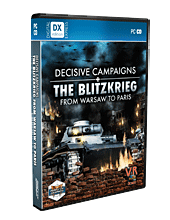
DC:BlitzkriegThen somewhere in 2008 I started work on the first DC. Decisive Campaigns : Warsaw To Paris. Instead of building a new system I decided to build it on top of systems already well tested and in place for Advanced Tactics. This meant a wealth of rules and detail was already present in the engine like FOW, ZOC, entrenchment, recon, landscape modifiers, morale, supply systems, intricate combat calculations, etc.. (lots of etc..)
On top of this I added everything that was necessary to make the game a more serious historical simulation. Like generals, their action cards, the ability for allied players (belgium and france for example) to share hexes, historical unit counters and more rigid chains of command and TOEs. Some of the improvements where visual (like the revamped interface) while others where more rule based. Two examples of the additions that will not have been noted by everybody that I am still proud of were the combat delay points (causing delays on conquered hexes for subsequent units moving through) and the persistent attack stack penalties (that avoided the stack-of-doom techniques).

Case BlueThen later in 2010 work on Decisive Campaigns : Case Blue commenced. Build on top of the DC1 engine. To really support the long scenarios (500+ units, 100+ turns, 160×120 hex map) in this game compared to the scenarios in DC1. The focus for the engine turned to giving the player the tools to sustain a long campaign and really present the player with a flexible OOB that could be modified to cater for whatever might happen during the very long fight.
I could say a lot more about unique DC2 features (like the oil rules and troop replacement systems that were added) but it is outside the scope of this short post. What matters is that I started here with some limited interaction between the player and the high command. The player could use PP (political points) to change the mind of the high command concerning objectives or for demanding more replacement troops of some specific kind. This is something that turned out to be one of the seeds for the explosion of cards and decisions in DC3.

B-DCIII_Materials_Box_3D_800Then end 2013 I teamed up with Cameron Harris and we build Decisive Campaigns : Barbarossa on top of DC2. I spent most of my time on further fine-tuning the engine, creating the best AI for DC so far and adapting the engine to allow for a wealth of immersion provided by the game design by Cameron. Reports and decisions now look the part and are well integrated in the rest of the systems (like statistics, counter shuffling and extra info tabs).
It was a very good decision to team up with Cameron, since with the previous titles I always lacked a bit the time to add everything I wanted those games to have. Working on a game together doubled the effort and made my dream DC game possible.

The AI
The AI got better every game. And I learned a lot. I coded a complete new AI for DC1 and then again for DC2. In DC3 I chose to build the new AI on top of the DC2 AI with the focus being on sustaining a frontline better and retreating if necessary and being able to keep a sustained offensive going by focusing on particular frontages. By not coding up the AI once more from scratch I freed up the time to do some serious scripting for the AI in Barbarossa. Resulting in the AI being very sensitive to the particularities of this game and both AIs having different plans available to them each play through to ensure replayability.

Each DC is special
Each DC game has been an handcrafted product and although the DC games share a lot of things they have all turned out to be really special in their own way. And for all three there will be things you can only find in one of them and not in the others.

I think DC1:Warsaw To Paris is maybe the most simple one to play with a relatively low feature set. But it is also a real ‘pearl’ of multiplayer wargaming. The game allowed for example the Germans to be played by up to 5 human players with one being in overall command and the others in army command.

DC2:Case Blue distinguishes it self from the two others in sheer size (units, number of turns and map) and giving the player an amazing amount of micro management freedom. Want to disband a regiment? Want to change the divisional type of the 113th infantry division? Want to form a new independent Motorized Regiment and slowly see the replacement troops trickle in? Want to shuffle your officers around? etc..

And well… DC3:Barbarossa I consider it like the crown on the series (for now).
Concerning counter shuffling there is much less micro management, but the decision systems and advanced reports we added make this game into something much more.

To me personally it feels a bit (and with all humility) like ‘king of dragon pass’ meets ‘wargame’. The addition of so much robust writing and decision points really makes the system shine. The decisions influence the units on the map, but the units on the map also influence the decisions. For example to have a detailed combat report in your ‘inbox’ on how the 10th panzer division failed to hold Rzhev just brings a sense of wonder to me… especially when I then have to make a decision based on the after effects in the chain of command of that battle as well.

Community Project
More news will still follow on DCX:Community Project. Its the free BETA title for future DC3:Barbarossa owners that basically builds upon an expanded DC2 ruleset and finally makes it much easier to create your own scenarios for Decisive Campaigns.

Best wishes,
Vic

Posted in DC:Barbarossa, DC:Blitzkrieg, DC:Case Blue, DCX : Community Project, Game Design | 8 Comments

Barbarossa Developer Notes #6: My Boss is a Psychopath

continued from developer notes #5

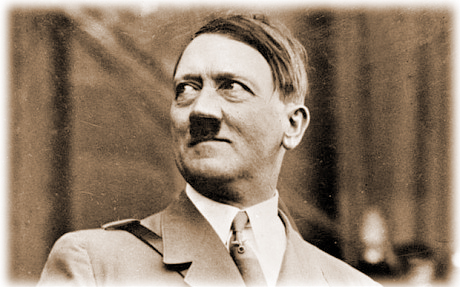
Hitler

Hitler was an outlier. Here was a domineering, driven, charismatic man who exerted a level of control well beyond any reasonable expectations of somebody perched at the very apex of a command pyramid. That those same personal qualities that enabled him to overpower and overshadow all those beneath him also drove him in directions best described as dark and sinister is not in dispute.

He was a most unpleasant individual but, having acknowledged this, it’s his influence on the command structure that is of particular interest from a design point of view.

blog_25

The German Player is firmly ensconced within the hierarchy. Hitler dominates from the top. How do you accommodate the reality of Hitler’s influence without turning the Player into a wooden puppet that jerks to the string pulls of a computerised Führer? Yet the Hitler factor was so strong that to exclude it from a game modelling Operational Command would be a major oversight.

Disassociating the game from Hitler’s dark side is an easy first step. That’s the low hanging fruit plucked and consumed. We’ll have to jump for the rest.

Hitler didn’t help matters. Rather than having clearly defined goals for his invasion of Russia, he kept changing his mind. One moment he was charging towards Leningrad, the next the Ukraine. Like a child with Attention Deficit Disorder he was easily distracted and would flip flop from one objective to the next.

At the commencement of Operation Barbarossa there was a specific plan in place which was largely followed as originally laid out. But it ceased after the Battle of Smolensk. The plan anticipated that by then the Red Army would have been defeated. Indeed it suffered such horrendous casualties that, if it had been a boxer, it would have been flat on its back on the canvas. But rather than stay down for the count it staggered, bloodied and dazed, to its feet. It possessed reserves hither to unknown by the Germans. They kept punching, landing blow after blow. It reeled and stumbled but stayed upright.

The Germans must have thought they were fighting a Bolshevik Golem. No matter how hard they hit, how often they hit or where they hit, it just wouldn’t die.

When Plan A succeeded tactically but failed strategically, the Germans were left in a conundrum. Tensions boiled over between Hitler and his High Command. Everybody had a different view on what to do next. There was no clarity or consensus.

It’s no surprise that Hitler became fickle and changeable. He wasn’t favourably disposed to taking the advice of the upper echelons of the Prussian Officer Corps at the best of times but when they failed to agree among themselves as to the best course of action he fell back onto his own devices.

Plan B was rapidly followed by Plan C which, in turn, was swept off the table to make room for Plan D.

To accommodate the ‘whim of the Führer’ the game has Hitler calling a conference to discuss strategy roughly once a month. There are five of these and it’s not guaranteed that one will be called every month. There is a measure of uncertainty. Some will be skipped. Except the last one in early November. That’s a given as it’s necessary to provide certainty for the Player.

At the completion of each conference Hitler will issue a new, numbered, ‘Directive’ that will outline his goals in order of priority. The Player has, depending on his chosen strategy, the ability to exert a measure of influence.

Mechanically we now have a reasonably realistic facsimile of Hitler’s decision making process. At irregular intervals the Player will be summonsed to a conference where upon Hitler will arbitrarily decide which objectives are to be given precedence over others. But what impact will this have on the Player? Will they be forced to comply with the fickle demands of the Führer?

Well that depends. Right at the start of the game they choose one of three over riding strategies that they will follow. The first requires them to support Hitler and take whatever is his current objective. As this is a moving target there are some obvious disadvantages. These are offset by assistance that Hitler is willing to give along the way.

At the other extreme ‘Demand Military Independence’ will have the Player standing up for his right to fight the war on his own terms. Without assistance and with the risk of getting fired if he fails to cover his flanks politically.

The interaction between the Player’s approach and Hitler’s changeable goals now becomes apparent. With one approach – Support Hitler – the outcome of a conference becomes vitally important and there is a need for the Player to be able to place himself in a position where he can exert some sway over what is decided.

With a different approach – Demand Military Independence – what Hitler decides is irrelevant as the Player has determined to tread his own path, albeit with some risk attached. Here we’ve got a workable mechanism that allows the Player to trade independence for ongoing assistance.

But that’s not all. The Hitler factor is woven into the fabric of the game even deeper. Every decision that is taken which aligns with Hitler’s current primary objective will be easier to make. It will cost less Political Points. It will be the path of least resistance.

Conversely a decision that is diametrically opposed to the stated goals of the Führer will be a harder road to tread with a Political Point premium being charged. To highlight this consider a straightforward fuel allocation decision. Perhaps you decide that you’d like Armeegruppe Mitte to have a greater share at the expense of the other two theatres. If Hitler has his heart set on Moscow then you’ll receive a discount but if Moscow is sitting third or fourth on his current list of priorities then you’ll be paying a premium in Political Points.

It’s a subtle way of reminding the Player that, while you are free to do as you wish, the view of the Führer needs to be taken into account.

Let’s not forget the fiddling. Hitler couldn’t help himself. As Barbarossa progressed he inserted himself more and more into day to day operational matters that were well below his remit as supreme commander. That book on Delegation previously mentioned? In one ear and out the other.

The game models this by applying intermittent movement penalties to a randomly selected Panzergruppe as these were the ‘bright, shiny, light’ formations that most caught the Führer’s attention. The level of interference is minor but enough be an annoyance. The frequency of the interference is keyed into the Player’s chosen approach. It’s assumed that if you’ve chosen to ‘Support Hitler’ then you are sufficiently inside the tent for him to meddle more often than if standing at the entrance, one foot on either side, with a ‘Moscow or Bust’ approach. A big advantage to the ‘Demand Military Independence’ approach is the total absence of interference by the Führer. He is standing off to one side, impatiently waiting for you to drop the ball.

The ability to shift a Panzergruppe from one theatre to another, as previously mentioned, requires the assent of Hitler. If the two of you aren’t on speaking terms then your strategic flexibility will be constrained.

Which highlights the focus that the game has given the ‘H’ factor. He’s there. He’s important. The Player is given scope to work with him, or against him, with corresponding trade-offs but without being forced to don a straight jacket.

Cheers,
Cameron

Posted in DC:Barbarossa, Game Design | 3 Comments

Barbarossa Developer Notes #5: It Would Help If I Wasn’t Surrounded By Idiots

continued from developer notes #4

Delegation

Being in Command entails making a lot of decisions. A fundamental rule is that the higher up the Chain of Command you climb the more decisions there are to make. This applies equally to the Joint Chiefs of Staff and the CEO of a Fortune 500 company.

Typically the increase in decisions required escalates in an exponential manner with each step up the hierarchy. It doesn’t take long before anyone attempting to ‘do-it-all’ is overwhelmed by sheer volume. It’s not hard to find examples of people who have reached an evolutionary dead end as a micro manager.

blog_24

Delegation steps in. Commanders have staff. They have subordinates. Their job is to take care of all the lower level decisions, freeing up the Commander for the important ones.

A model of Command would be very one dimensional if it didn’t incorporate delegation. You would be, once again, elevating the Player up to a God like status where Command is a mere wave of the hand.

Delegation implies tension. You’re busy, you’ve got a lot on your plate. There isn’t time to personally take care of everything, even if your staff have ensured you are only dealing with the important decisions.

Choosing which decisions to delegate is an interesting decision in itself. Having your Chief of Staff deal with a matter is likely to result in a less optimal outcome than if you tackled it yourself. His grasp of the bigger picture, his strategic understanding is at a lower level than your own. As it should be. He’s not in charge, you are.

In order to make this model work there needs to be a currency of Command. A finite resource that is accumulated and spent. Which would be Political Points (PP). These are an abstract concept that encompass your personal time and energy, your political goodwill and your available staff resources.

Political Points allow decisions to be quantified. Yes, you can choose that option but it will require ‘x’ amount of PP’s. Certain decision options require more PP’s than others. At times you aren’t going to have enough PP’s to cover all the decisions. Delegation becomes necessary.

Do you keep a reserve of PP’s against a rainy day when a really crucial decision might turn up or do you spend, spend, spend, moving forward on a wing and a prayer?

Cheers,
Cameron

Posted in DC:Barbarossa, Game Design | 2 Comments

Barbarossa manual sneakpeak!

DC Barbarossa prelims-1-b
It is a bit of a subjective compliment, but truly: Cameron has done an amazing job writing the best manual I have seen in a long long time. It is very complete and detailed. As you can already see here in the tome of contents (PDF).

Also a big thanks to the publisher Matrix Games for doing the staggering amount of excellent DTP work.

Now… detail is important, but at a 300+ page size it is maybe even more important that the manual is well written, witty at times and has 100s and 100s of screenshots. I can already disclose that is the case. More news to follow on the Barbarossa manual in the near future.

Best wishes,
Vic

Posted in DC:Barbarossa, History & Books | 4 Comments

Barbarossa developer Notes #4: Zen And The Art of Knowing Who To Salute

continued from developer notes #3

Superiors and Subordinates

Once it was decided to model a Chain of Command there was a need to fill the hierarchy with people. For the Soviet side they were all subordinates but the German side involved an equal mix of superiors as well.

Subordinates are easy to deal with. You give them orders and they carry them out. Perhaps not quite how you’d like them to and perhaps with a degree of resistance but, overall, if you ask them, they’ll do it.

Superiors immediately run into the problem of authority. They are your boss. You’ve got one at work and you’ve probably got one at home. Do you want another, game based, one telling you what to do?

Having an upset subordinate yelling at you might not be ideal but having the computer speakers spout forth curt, arrogant, orders from above, demanding that you do this or that, is only going to have you grumpily checking the prices of a new monitor the following day and having to explain why you’ve got a bandaged hand.

A key design challenge that had to be overcome was how to give a sense of being within a hierarchy while at the same time not hobbling the Player’s ability to play the game as he’d like. This is, as you’d imagine, a pretty fine line. Go too far in the direction of authority and the Player ends up chaffing against unwanted restrictions. Swing back the other way and you’ve lost the immersion of having to answer to Superiors.

The German High Command structure helped in this. Rather than the highly efficient, well oiled machine that it is typically portrayed as it was, in reality, a dysfunctional organisation with many quirks. There were reasons for this and it deserves a detailed explanation of it’s own but, for the moment, we can assume that the lines of authority were, in many cases, fuzzy.


Von Paulus (on phone) about his conversation with Jodl on the command set-up in North Africa. All the Führer cares about is that Rommel should not be hampered by any superior Hq. Put over him. Jodl will send up another plan.

F.M Von Halder’s War Diary, 13th May 1941


There were many cases of overlapping authorities and individual power bases. Who reported to who was clear cut only where everybody involved was a professional military officer. Higher up, where there were Party members and assorted flunkies, it was a lot vaguer.

It was greatly complicated by the micromanagement and interference of Hitler himself, the man sitting at the top of the Chain of Command. He hadn’t read the book on ‘How to Delegate, sit back and let your Generals Win the War’. Then again, perhaps he had and it had ended up in the rubbish bin. Hitler’s interference was a doubled edged sword. There were times when his intuitive grasp of a situation was far superior to any of the professional military judgements on offer. As the campaign progressed he became more and more convinced that he knew better. Hubris be thy name.

Eventually the great gambler succumbed to the inevitable ‘reversion to the mean’ that applies to all mortals. Sheer force of personality and a domineering, dictatorial, manner couldn’t overcome the law of averages. Like any compulsive gambler he ended up losing more than he started with.

Which is a topic well outside the scope of this book. But in terms of superiors it offers some interesting angles. The Player has the role of Operational Commander of the Eastern front – F.M Franz Halder. He had a direct superior officer, that of F.M Von Brauchitsch who was Commander in Chief of the German Army. Both are professional military men and it was a clear cut relationship.

Except it wasn’t. F.M Von Brauchitsch was considered ineffectual in dealing with Hitler. Here is a superior who, on occasion, would step forward and do his job but who, most of the time, was too busy dealing with his own problems. Hitler was his personal banker. Von Brauchitsch was in heavy debt to the Fuhrer. He lacked the moral fibre to stand up to Hitler when it was necessary. By the end of 1941 he was gone. A convenient scapegoat for the failure to take Moscow and in failing health. Exit stage right.

Then there were the motley cast of Party characters who were all higher up the Chain of Command but whose influence over the Player’s assigned role varied and was, at times, murky. They were superiors but off to one side, tangential to the main game. But all of them were capable of exerting an influence when the need arose. We could consider them to be part time Superiors.

The German Command structure was unique in that authority over logistical matters was split between two people – General’s Gercke and Wagner. Logistical concerns are always going to play an important part of an invasion of a country as geographically vast as Russia. Gercke and Wagner are destined to have staring roles in a game portraying Operation Barbarossa.

Which raises the question of whether they were superiors or subordinates? They were neither. Both were in the category best defined as ‘unclear’. Both straddled multiple roles in dual headquarters (OKH & OKW).

This is a gift. Here are two characters dealing with the one key function. It’s a little like having two separate builders work simultaneously on an extension for your house. They both have their own teams of subcontractors. They are both jointly building your extension. Yet when there is a problem who do you talk to? Is one going to blame the other? Are you going to have to take sides? How are you going to keep them both happy and maintain the momentum?

What about inter service rivalries? Naval matters were largely constrained to the bathtub. They did play a part but it was the kind of role that you’d hire somebody off the street for. They’d be instructed to say a few lines, smile at the camera and don’t cause any trouble.

goering

For the Luftwaffe, however, you’d need a competent actor, one with enough gravitas to carry the part. It’s a major role. The Air war was an important aspect of the campaign. Hermann Goering, the corpulent, overdressed Reichsmarschall, competently holds down this role with his own unique style. He is both a superior in the chain of command and a character with whom the player will have a lot of contact with. He was colourful, unpleasant, eccentric and a take-no-prisoners political infighter. Perfect.

Cheers,
Cameron

Posted in DC:Barbarossa, Game Design | Leave a comment

Vics Barbarossa AI Log #4 : Ready for balancing

After analysing the German artificial intelligence (AI) I have done a lot of coding and scripting on both sides.

As you can see in the video above both sides are functioning more or less as they should and I am moving over to fine-tuning things now. The latest version of the AI comes with different plans for the German and Soviet AI. Every time the game is played the German AI will be assigned a random plan from a list of about 10 different possibilities. The Soviet AI does something similar. The difference being the German AI really picks different schwerpunkten each time, while the Soviet AI picks a different psychology each time.

So for example one game the German AI might focus on Leningrad and the next game it will try to make a deep envelopment of Moscow from the south. While the Soviet AI might be more or less aggressive and be more or less likely to create ‘fortress cities’. The idea here is to avoid replays to be the same experience. Coupled with the dynamic decisions and events of the game itself I am quite sure we are giving the player a very interesting experience here.

Feedback on the beta forums has been good, but for some players the AI on regular setting was to difficult and for others to easy. To combat this and to properly test all those possible different plans the AI will be using: the newest version of Barbarossa has been equiped with an optional metrics sharing button in the preferences menu. I strongly advise all testers (and in the future: players) to switch this button on in order for us to get some core data on game balance. What the metrics does is sending your game progress abstracted and anonymous in less than a dozen statistics to our server every 5 rounds. It should be enough info to make proper statistical analysis on which plans work the best and at what AI level what percentage of the players get beat. Exactly what we need to know to further balance the game.

Best wishes,
Vic

Posted in Artificial Intelligence, DC:Barbarossa | Leave a comment