Decisive Campaigns III design blog #10
Hitler gambled on conquering Russia. In ’41 he came dangerously close to winning. He didn’t and ended up losing the campaign, the war, his country and his life. Invading Russia has, historically, always been an all or nothing roll of the dice. Nobody invades Russia hoping for a draw.
If Hitler had won an argument could be made that it would have been enough for Germany to secure Europe long term and that D-Day would have been nothing more than a logistical pipe dream. Hitler was playing for very big stakes indeed which makes Barbarossa such an interesting campaign. Two giants facing off in a cage fight to the death.
The game models the German side in great detail and enables you to experience the dramatic opening thrusts, the massive encirclements, and the increasingly desperate drive to victory before a cruel winter brings everything to a halt.
But what about the Russians? You could take any period of the Eastern Front and find a way of giving the Russian player a fighting game of parry and counter punch. Any period, that is, except ’41, the time period portrayed by Decisive Campaigns 3.
If you stripped away all the frippery the role of the Russian player in ’41 is to be dragged out onto the street and publicly beaten to a pulp. All he can hope for is that he’ll still be able to stagger to his feet once it’s over.
The single biggest design hurdle I’ve had to overcome is how to make getting kicked in the head fun. I could, off hand, think of ways to do this but they all require the game to don high heels and a feather boa before discreetly removing it’s ‘historical simulation’ badge and lobbing it into the nearest rubbish bin.
Which isn’t acceptable as this is a wargame with a strong historical bent. It has an obligation to model the key factors that influenced the Red Army. If the over arching narrative for the Russian player is to get beat up then that’s what has to happen. The degree and extent of the beating can be allowed to vary and there can be scope for a skilled Russian player to achieve a plausibly non-historical outcome but at the end of the day the player is still going to have to get violently punched to the ground and kicked in the head.
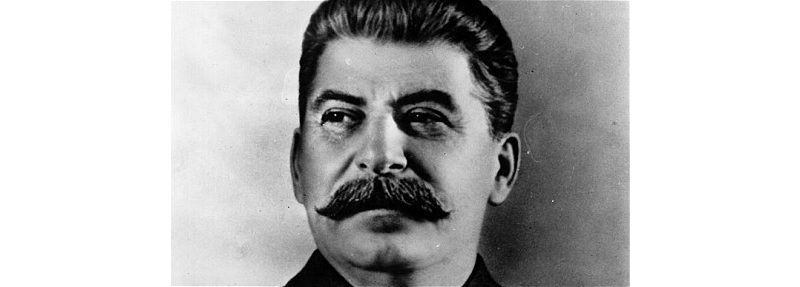
Finding a way to resolve the conundrum of turning such an unsavory historical experience into an enjoyable gaming outcome has been a challenge.
Does it have to be fun? Well it wouldn’t be much of a game if it wasn’t. A strongly historical military simulation still needs to be fun to play. It’s a game, not a masochistic endurance test of your pain tolerance.
Before we talk about my resolution to the problem it’s worth mentioning the different factors that affected the Russians.
There are any number of these but if I had to isolate the main ones I’d go with the unpreparedness of the Red Army (caught, as they were, in the midst of major doctrinal and organisational change), the rigidity of their centralised system, the dearth of experienced commanders, the panic and confusion caused by the German blitzkrieg, the constant reconfiguring of their Command structure and Stalin’s guilt.
A lot of these are intertwined with Stalin’s guilt probably being the most dominant. For reasons lost to history, Stalin chose to ignore any number of repeated warnings that Germany would invade Russia on the 22nd June ’41. Intelligence can be nebulous and flaky at times but when there were multiple corroborating sources it’s difficult to conclude anything other than abject failure to correctly assess the situation.
This was Stalin’s failure alone. It was he who refused to heed the warnings. It was he who deliberately positioned the bulk of the Red Army as far forward as possible against the advice of his senior military advisers. It is he who filled the Red Army with Political Officers and gave them equivalent authority (three quarters of them had no military training). It is he who had ruthlessly scythed through his experienced Officer Corps in the Purges of ’37 and ’38.
When confronted by the reality of Barbarossa, Stalin’s first reactions were shock and denial. He spent the initial days of the invasion in an alternate universe where the Red Army would soon be sweeping through Poland on their way to the Brandenburg Gates.
When he finally came to terms with reality (around D+5) he subsided into a funk and disappeared to his country Dacha for three days, leaving it all for others to deal with. There is speculation that, having caused the mess, Stalin was doing his level best to avoid shouldering the blame.
As it turned out he was asked, by the Politburo, to return to Moscow and assume the post of Supreme War Leader. But the guilt at his misjudgment of Hitler’s intentions and the fear of others blaming him was a factor that fueled his, already, not insubstantial paranoia. Stalin was, in ’41, a man constantly looking over his shoulder.
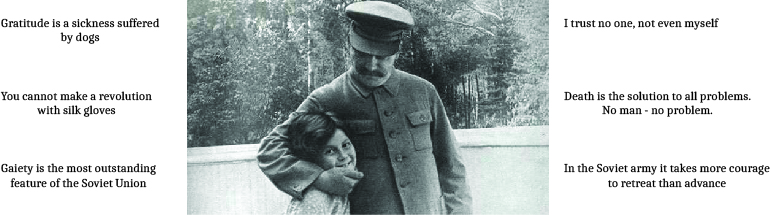
The Russian Experience
It was clear from the beginning that the player would assume the role of Stalin. Not for him is the well oiled machinery of the Wehrmacht and the multitude of masters. No, he will fill Stalin’s shoes and take on the persona of a ruthless, cornered, dictator. This, all on it’s own, is a good foundation for an enjoyable experience.
The game mechanics have been heavily pruned and streamlined. Large components such as the Logistical system have no place here. The Russians had the benefit of interior lines and in falling back onto their own resource base. While there were occasions where logistical restrictions played a role, overall, relative to the Germans, they had minimal impact.
Involved systems such as Mechanical Reliability aren’t needed. You can, as the Russian player, simply assume that every time you move a mechanised force you’ll loose tanks from breakdowns. There is no need for ‘Refit’ cards and a multitude of decisions revolving around repairs and workshops. Tanks that broke down were simply abandoned. The Russians lost more tanks from mechanical failures in ’41 than they did from combat. A large portion of this was due to the lack of parts and basic knowledge deficiencies of the inexperienced tank crews.
There is no point in differentiating this commander from that one in their ability to wage war. In an environment when getting an order to an Army and having it respond in any meaningful manner was a touch and go proposition who was in charge was often irrelevant. How many field radios did the entire Red Army possess in ’41? It’s a ridiculously small number. Communication was done mostly via telegraph and telephone, both highly susceptible to breaks and useless once an Army retreated from previously prepared positions.
The large amount of artillery possessed by the Russians? Not much good once they retreated and were unable to contact, or coordinate with, anyone due to a shortage of field radios. The Russian Air force? Did it play any meaningful role in ’41 other than targeted harassment towards the end of the year when they were flying from heated airfields and dealing with an overstretched Luftwaffe?
Note that all of the above items were eventually successfully addressed by the Russians but in ’41 there was no time to do anything other than hang on tight with white knuckles.
Having streamlined the mechanics the Russian side has been focused, laser like on the aspects that matter. New systems have been put in place to make playing the Russians completely different to that of the Germans. Schnapps and Rollmops, while listening to Opera in the background, it isn’t. Instead it’s a more utilitarian, straight Vodka in a dirty glass, experience.
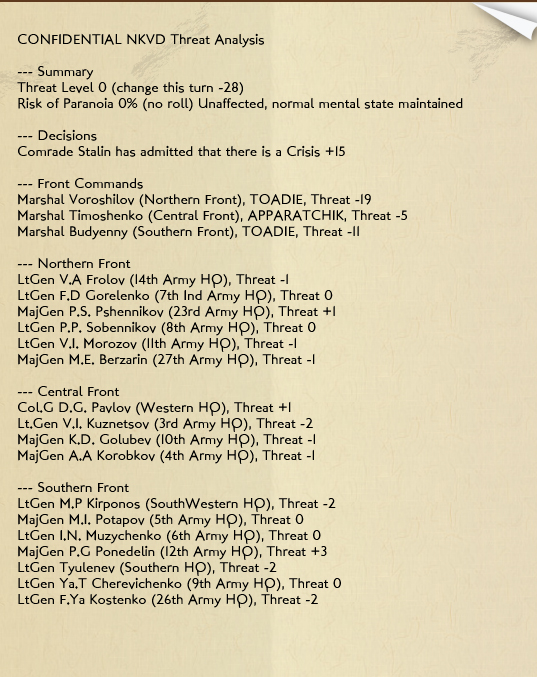
Commanders are modeled down to the Army level. They have two numerical characteristics, Initiative and Threat, along with a generic ‘type’.
The over riding concern for Armies is their ability to ‘Activate’ (gain Action Points) each turn. A random roll is made that is influenced by the Army Commander’s Initiative, the Front Commanders Initiative and a number of situational factors.
A Division in an Army that doesn’t activate still receives a number of Action Points (40 AP) so it’s not a complete loss. It can also ‘Partially Activate’ as well as the obvious ‘Fully’. Importantly, whenever an Army achieves a level of activation (Partial or Full), it’s Commander’s Initiative increases, thus making it easier to activate as time goes on due to learning on the job.
Threat is the central point of the design. In the game a commander’s Threat rating is how he is perceived by Stalin. Each turn the cumulative Threat ratings of all Commanders are tallied in addition to a range of other factors (loss of Politically Important cities for example). A random roll is made and if it’s less than the total Threat level then Stalin is assumed to suffer a ‘Paranoid Episode’.
What this entails is the total shutdown of your ability to pull the levers of power (you lose access to all Action Cards), a measure of confusion throughout and a number of your Commanders being dragged outside and shot. Best avoided.
Now I’m not inferring that there is any chance of a military, or political, coup that would remove Stalin but it’s quite feasible that there would be a perceived threat of such in his own mind given his rather dubious historical record. And, yes, he did have Commanders shot for no other reason than to cover up his own blunders.
By early ’42 onwards Stalin was secure enough in his position that none of this was a problem but in the desperate days of ’41 it wasn’t so clear cut.
The dual Initiative/Threat mechanics is straightforward but there are a lot of interesting game mechanics hanging of it.
Commander’s are assigned one of a number of generic ‘types’ which determine their starting Initiative and Threat ratings. A TSARIST is an experienced, well trained Officer who has, miraculously, survived the Purges and can be expected to have a high Initiative level. Any Army he commands can be considered mobile and responsive. But he’ll be a threat.
On the other end of the scale is a TOADIE. Not hard to guess how he got the job. Poor Initiative will have his Army marching in circles when they should be hitting the flank of a Panzergruppe. You won’t have to worry about him though as his Threat rating be at an appropriate level for a subservient ‘yes’ man.
Hence the basic conflict. Good Commanders generally have high Threat levels. Whenever a Commander’s Initiative increases it’s likely their Threat level will as well. To much Threat and you’ll begin having ‘Episodes’.
To keep a lid on the rumblings of discontent (the Army Cdr’s are assigned a random type at game start which is heavily weighted towards the dud end of the scale) you have Marshals, each commanding a Front (equivalent to a German ‘Theatre’). Marshal Budenny, historically a ‘WAR BUDDY’ has a big Negative Threat rating which tends to damp down any boisterous subordinates. But how long are you willing to put up with his poor military acumen (low Initiative that acts as a global modifier to all his subordinate Army Activation rolls)?
Note: I’ve had to take a ‘mean line’ through the scatter graph that was the ever changing Soviet High Command structure in ’41.
Stalin has two trusted ‘troubleshooters’ at his disposal. Marshal Georgy Zhukov and Commissar Nikita Khrushchev. Historically these two gentlemen were trusted and used by Stalin in various roles. (I’ve taken a few liberties with history here but they are minor transgressions). As the Russian player you are able to dispatch these gentlemen to any HQ, Army or Front, on the map.
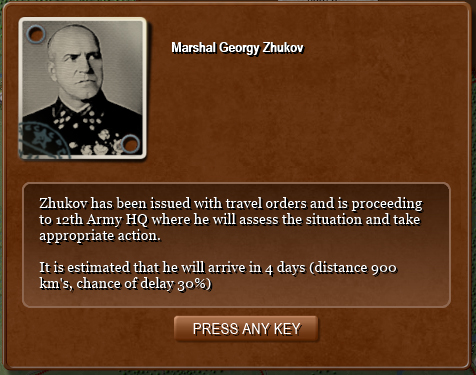
Zhukov will give an immediate boost to an Army, or an entire Front’s, activation chances. Stalin didn’t ask him to take charge of the defence of Leningrad and Stalingrad for nothing. He’s the man who makes things happen in a military sense.
Commissar Khrushchev is your hatchet man. He’s the person you send if one of your Commanders is getting above themselves. There are a number of things he can do on arrival. The ‘Loaded Pistol on the Table’ is my personal favourite.
Stalin also has, at his disposal, a range of Command options. These allow you to manipulate a handful of key variables that have big picture effects. Importantly, the cost of exercising these options (in Political Points) doubles each time. This represents the rigidity imposed by the centralised Military and Political systems in place. Yes, you have a lot of options but you need to be very careful when and how you exercise them.
A typical game as the Russians might start with you facing the onslaught with an army commanded largely by no-hopers. They’ll be a sprinkling of competent commanders that you’ll be leaning on and you’ll be tearing your hair out trying to decide which crisis needs Marshal Zhukov the most. He’ll be a busy man. Hopefully he won’t get delayed in transit as he races from one HQ to another ‘Instilling Backbone’.
You’ll start with barely any Political Points (the opposite of the Germans) to reflect the initial shock and panic. Do you gamble and ‘Prioritise a Front’ knowing that it’ll be a while before you can afford to change your mind? (doing so grants a global Activation bonus and a funnels more Reinforcements to your chosen Front, away from others).
As time progresses and your surviving commanders gain experience you’ll find yourself squinting at your shadow as the cumulative Threat rating starts climbing above zero. Commissar Khrushchev will need to be active, if he hasn’t already been out there ‘Blaming’ or ‘Investigating’ a recalcitrant Marshal.
If the Germans are still clawing their way eastwards you could try ‘Exhorting Victory!’, heaven forbid ‘Admit to a Crisis’ or declare that there will be ‘No Retreat!’ in a key city. But be careful as there are only so many speeches you can give and so many times you can plead mea culpa.
Remember the cost in PP’s is doubling each time. It doesn’t take long before nobody is listening to your apologies or your speeches. And how many red lines can you draw on the map and tell your soldiers to die where they stand defending them before they, also, stop paying attention?
Is it time to bite the bullet and release a TSARIST Marshal from the Lubyanka basements in the hope that he can pull a demoralised Front together? But never forget that you’re a RUTHLESS DICTATOR. Assemble the Politburo and ‘Demand more Power!’
At least you’ll die standing. And that big Germanic thug that’s been beating you up?
That’s his testicles rolling around in the mud over there.
Cheers,
Cameron

I’m in!!!!
I’ve been reading these blog posts with great interest and admiration. The systems and innovations that you are creating are inspiring. The wargame has evolved in many different directions over the last 40 years; Some of them dead-ends. Your ideas to place the player more fully into the experience of the historical commander while retaining the fun of a game are exciting. I am eager to dive in and have the experience.
Do you have an updated ETA on launch?
Congratulations and Good Luck!
– Glenn Drover
Amazing, simply amazing! DC3 offers a lot of variables and different paths to choose from, guess every game is unique. To win the player should adapt wisely his tactics to a changing world. Your revolutionary ideas are like a breeze of fresh air in the wargames market.
Thanks
Hi Glenn,
ETA is still a wild guess at this point but solid progress is being made.
Cheers,
Cameron
“When he finally came to terms with reality (around D+5) he subsided into a funk and disappeared to his country Dacha for three days, leaving it all for others to deal with.”
Actually he did not go to the Kremlin for two days but did attend meetings in other locations in Moscow. The above story gained traction after Stalin’s death as part of Khrushchev’s de-Stalinization.
Brilliant, just brilliant, so many games claim to be accurate representations of the war on the Eastern Front and come nowhere near the reality of those early battles, during Barbarossa. It was not so much that the Soviets were surprised and unprepared, the Soviet command was well aware of German intentions, through a highly efficient espionage network and they were preparing for war. The historical results were caused by the inept way that the preparations were carried out, equipment that was not available and faulty strategy.
The Front commanders were caught between carrying out their pre-planned sealed orders (to be opened in the event of war), confused orders from Moscow and the reality of the events unfolding around them. Always in the knowledge that a wrong discussion could be politically and actually fatal and against a background of communications systems relying on cables, which became redundant as soon as units left prepared positions. Little, or no attention, applied to the tactics of defence, something that early Soviet army doctrine did not contemplate as ever being necessary.
Can’t wait to see this in action, it’s been a long wait for a game that does justice to this campaign.
Hi Chris,
Didn’t know that.
One of the things that has really stood as a consequence of my research is the amount of inconsistencies between sources over the most basic facts, let alone the subtler points.
Given WW2 happened less than a hundred years ago, in an environment when a significant amount of recording of events happened at the time, it’s mind boggling how much disagreement there is.
I wouldn’t like to guess at the accuracy of historical events back in, for instance, medieval times.
The hair pulling involved in figuring out what happened has made me thankful I’m not an Historian.
Cheers,
Cameron
Hi BJ,
As a result of what you’ve mentioned above the Soviet Armies all commence the game with an Offensive posture.
The initial cost of changing over to a Defensive posture is set deliberately high although you have the option to lower it as time goes on. Reinforcement Armies arrive with a Neutral posture.
Cheers,
Cameron
The first orders from Moscow on the night of 22nd June were for all Front commanders to counter-attack and regain any ground lost, up to the State Frontier. SW Front was given the additional mission of attacking into Poland and encircling the invading Axis Forces on that front, presumably in line with Stalin’s assumption that the German principle objectives were the resources of the Ukraine.
The Soviet Front commanders quickly lost control of most of their forces, as they were reliant on telegraph and courier services to pass information and orders and had little radio communication (same problem for the French). Moscow was faced with an information black-out, as the Germans over-ran Soviet HQs and cut communication links. It’s worth noting that, although Guderian was renowned as a commander of mobile forces, his early expertise was in radio. His innovation was to combine the mobility of armoured forces with radio based command and control techniques.
This highlights the importance of the sealed orders, as when the Soviet forces started to move, contact with higher command was often lost and commanders could not easily react to rapidly changing circumstances. The Soviets expected to conduct a counter-offensive along pre-planned lines and had no plan ‘B’ when that plan became impossible.
After ‘Barbarossa’ a Soviet report noted that Red Army doctrine did not encompass defence, it was assumed that the battle would always be carried into enemy territory, as the USSR would either be the aggressor, or that the Red Army would instantly counter-attack any invader.
This all adds up to the huge problem of being in an Offensive Posture and the difficulty of changing Posture, whilst under intense attack. The game set that way looks right and can’t wait to see how it works out.
If there is any possibility of what-if scenarios, as an alternative strategy for the Soviets was to maintain a main line of defence on the original border, along the fortified ‘Stalin Line’ and using the newly acquired territories as a buffer zone, covered by screening forces. This results in the Germans encountering the Main Line of Resistance as they are reaching their logistics limits, after the first 200 miles of advance, or is that asking too much of the game system.
Either way this all looks very, very good.
Best regards BJ.
The re-writing of history is a major industry and it started as soon as the war ended, as each nation sought to establish its legacy. No side is immune from this, but in the USSR, it was carried out on an industrial scale.
‘Bloody Triangle: The Defeat of Soviet Armor in the Ukraine, June 1941 ‘ gives a vivid picture on the South-Western Front, during the first 12 days of ‘Barbarossa’. Forgetting the political implications of this tragedy, it is a testament to the suffering and achievements of the Soviet forces during that time. No wargame has ever portrayed the reality of the Eastern Front in those early days, DC3 seems to be coming closer than ever before.
Most players want their games to reflect historical realities, but what is historical reality. Is there such a reading list that can be trusted. I would strongly recommend the above book, as a worthy addition to such a list.
Best Regards BJ.
Hi BJ,
I’m anticipating providing a few ‘what-if’ scenarios and a Stalin-line defence would be a good candidate for one.
Interesting book recommendation.
Cheers,
Cameron
Book Recommendations:
Tank Warfare on the Eastern Front 1941-1942: Schwerpunkt by Robert Forczyk
Operation Barbarossa and Germany’s Defeat in the East by David Stahel
Operation Typhoon: Hitler’s March on Moscow, October 1941 by David Stahel
Thanks for the info on alternative scenarios, historical accuracy is good, but other options enhances re-play opportunities.
Didn’t mean to hi-jack the blog on reading material, but a credible reading list helps in understanding the subject.
Operation Barbarossa – The German Invasion of Soviet Russia – Robert Kirchubel, is an Osprey compilation of three previous volumes, it doesn’t pretend to be a heavy weight contribution to the subject, but gives a good overview. At least the author has read and taken note of ‘Directive 21’ and the relationships between both German and Soviet commanders, with their superiors, which explains a lot about the command crisis facing both sides.
Your arrangements for command relationships are something new in these games and will add a lot to the realism and interest in DC3 Barbarrosa.
Best regards BJ.
Hi Chris & BJ,
I have a few of the books mentioned, will look at the others in the fullness of time. Here’s one in return that you may not have run across.
‘Seven Roads to Moscow, by W.G.F Jackson. It puts Barbarossa into an historical context with all the other, previous, invasions. What worked and what didn’t.
Cheers,
Cameron
Tank Warfare on the Eastern Front 1941-1942: Schwerpunkt by Robert Forczyk
Bought this on Kindle, pleased to see that the maps have been optimised for Kindle, which in most publications are too small to read. This book is clear and readable.
Thanks, BJ.